An Overview of the Development of Hygienic Absorbent Products
People have needed products to contain bodily fluids since time immemorial, so it’s not surprising that the history of absorbent hygiene products dates back to ancient times. In the baby care sector, swaddling cloths were used with absorbent inner layers to provide cover, protection, and containment. In the feminine hygiene sector, both internal and external protection products were known at least 3,500 years ago.
Today’s absorbent hygiene products offer a level of sophistication, comfort, and discretion that earlier generations could only have imagined—but that millions of people around the world now take for granted as an everyday essential of modern life.
Baby Diapers
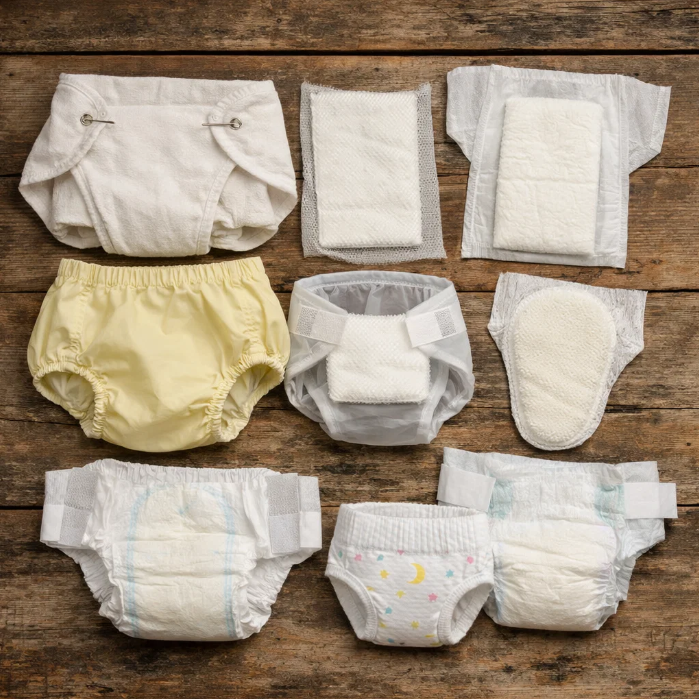
Before 1936, diapers were mainly cotton-based ribbed toweling or cotton muslin. Both could be laundered and reused. They typically took the form of a square of fabric wrapped around the baby and secured with safety pins. The diaper was then covered with reusable plastic or rubber pants with elasticized leg openings.
In the late 1930s, early forms of tissue-based disposable underpads and diaper inserts were introduced in Sweden. Developed by Pauliström Bruk, several versions of this basic product emerged between 1936 and 1942, including the use of rubber pants to hold the cellulose pad in place. In 1950, the company introduced a new version based on bleached cellulose wadding with a knitted mesh outer layer, which could be inserted into a holding pocket in rubber pants. That same year, Johnson & Johnson introduced a rectangular underpad product made from cellulose wadding with wet-strength tissue as the cover stock and plastic as the backing. In 1957, SCA Hygiene Products (formerly Mölnlycke) introduced a “pear-shaped” insert formed from de-fibred wood pulp with a knitted mesh cover.
The convenient disposable baby diaper is a relatively new invention, often credited to Marion Donovan. In 1950, she cut her shower curtain into plastic envelopes and slipped absorbent material inside, using snap closures to secure the diaper on her baby. This early disposable form was an immediate success, largely because it saved time for the growing number of working mothers.
However, the disposable diaper revolution began in earnest in 1961, when Procter & Gamble introduced the first disposable diaper in the USA. It was based on cellulose wadding with a plastic backing and a nonwoven topsheet. Later developments included the use of fluff pulp instead of dissolving-grade wood pulp, the addition of adhesive tapes, and the use of plastic back sheets.
Further developments in the mid-1980s were driven by improved superabsorbent polymers and better methods for incorporating them into the pulp core, as well as innovations such as frontal and resealable tapes and elasticized waists. In 1989, Kimberly-Clark introduced the first disposable training pants to help children transition from diapers to toilet training. Training pants typically have less absorption than conventional diapers, which can reduce comfort when wet. They are more underwear-like in design and easier for children to put on and remove during training. More recently, this product category has evolved to include features intended to encourage toilet use, as well as trainers with higher absorbency for nighttime use.
In 1991, the first “pant diaper” was introduced. This product category offers the same absorption capabilities as a conventional open diaper, but with a pull-on design. With higher absorbency and a pant-like fit, it provides an alternative for children who are crawling, walking, and moving around more.
Disposable diapers today are much thinner and more absorbent than earlier versions, making them more effective. They are also more comfortable for infants and more convenient for parents. In addition, increased usage has been associated with reduced skin irritation in individual children and decreased spread of infectious disease among children in group care environments.
Feminine Care Products
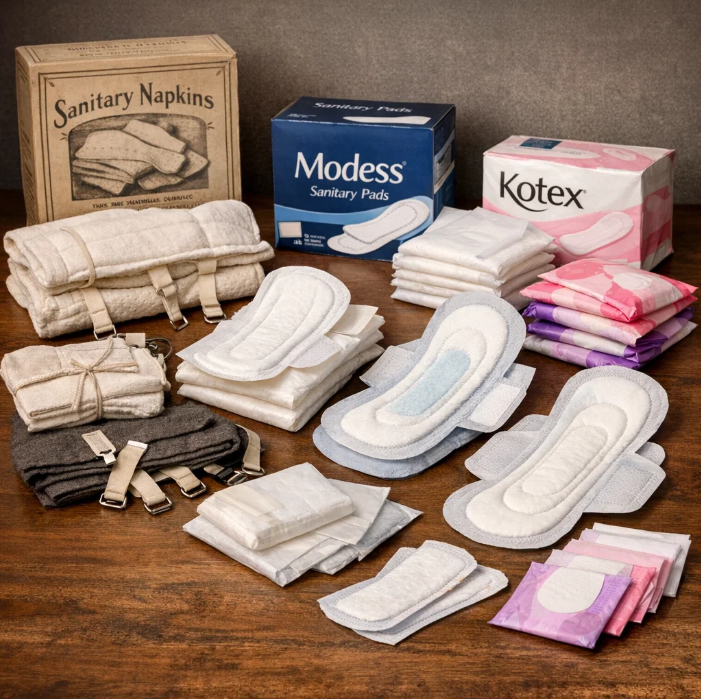
Disposable pads were first commercially available around 1895 with several of the first disposable pad manufacturers also being manufacturers of bandages. However, at that time the subject of menstruation was not openly discussed and the market was slow to progress because of the difficulties of product promotion and the product’s perceived expense. Their usage gained momentum during the First World War when nurses used wood pulp bandages to catch their menstrual flow, creating a pad that was made from easily obtainable materials and inexpensive enough to throw away after use. Successful commercialization commenced in the 1920s since when the use of disposable menstrual pads has become pervasive in the industrialized world.
During the 1970s and early 1980s menstrual pad product development was significantly influenced by developments in baby diapers and as experience was gained in one field, it was rapidly incorporated into the other.
One of the most significant developments was the use of hot melt adhesives in self adhesive pads. These products could be held in place by glue lines on the back of the pad, which fixed the product in position within the normal panty garment, eliminating the need for belts and pins.
Further developments focused on facilitating better fluid distribution and use of the absorbent core. This led the way to much thinner products. More recent developments have included the addition of “wings” to the sides of products to facilitate the fixing of the pad in place in the undergarment. This assists in stopping bunching and preventing side leakage from the pad. This concept was further developed and extended into the development of “panty liner” type products, which are not primarily intended for management of menstrual flow, but are designed to handle body fluids at any time. This allowed the products to be much smaller, thinner and more discreet while still fulfilling an important need.
Tampons
Although a modern product, the principle of an internally (inside the body) worn hygiene product is not new; their use is recorded over 2000 years ago when Egyptian women were known to have formed smooth papyrus into rolls to insert into their vagina to collect menstrual flow.
Industrially manufactured tampons were first introduced to the U.S. market in 1936 and reached Europe in 1938. Early market response was tentative due to concerns about tampons and their perceived impact on virginity and sexuality. This hesitation was soon replaced by widespread acceptance as women experienced the benefits of tampons—especially the freedom and flexibility they provide for work, leisure, and sports. Since then, billions of tampons have been sold worldwide.
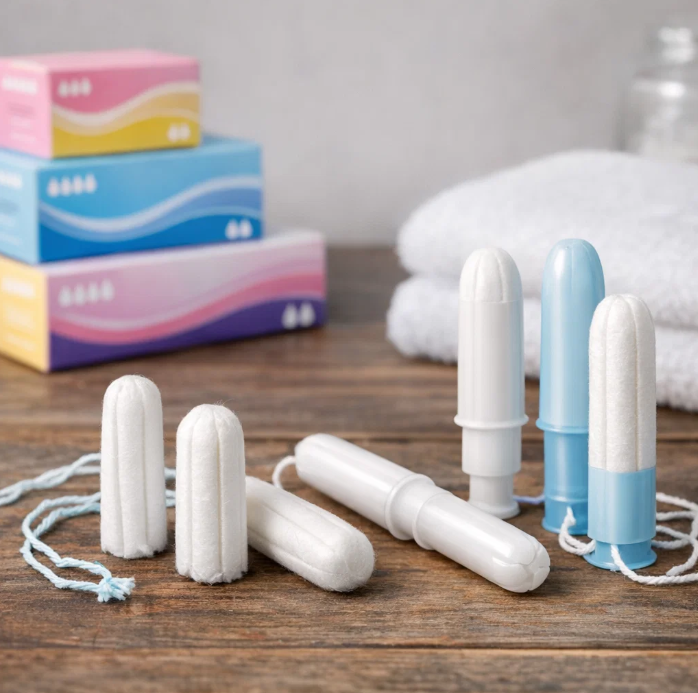
The primary function of a tampon is to absorb menstrual fluid within the vagina after it has left the uterus, providing discreet protection. Compared to externally worn pads, tampons require a bit more familiarity with female anatomy. When inserted correctly according to the instructions in the package, a tampon should not be felt, allowing you to go about normal activities—including swimming during menstruation.
To meet different menstrual protection needs, tampons are available in various absorbency levels. They also come in different versions: some are inserted using a finger (digital tampons), while others are inserted using an applicator (an insertion aid).
Incontinence Products
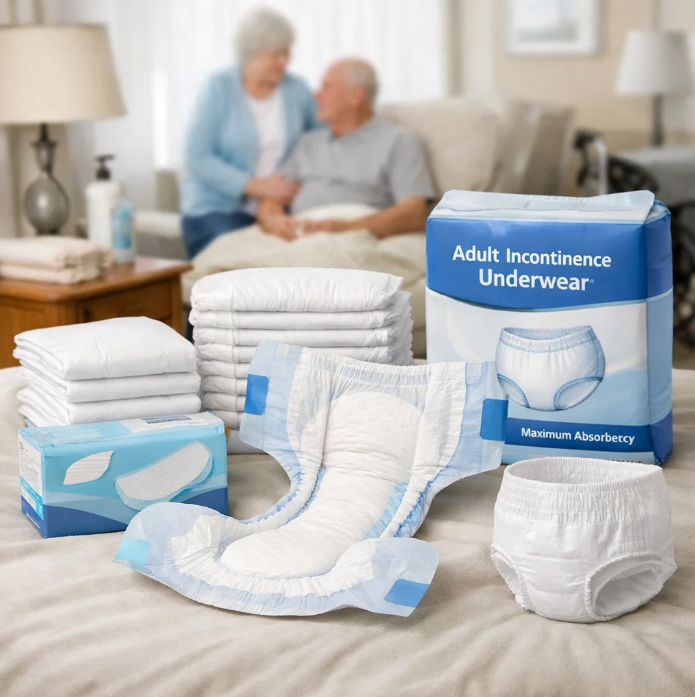
Absorbent products specifically designed for adult incontinence are the newest category of hygiene products. Their use in Europe began in the late 1960s. The design is based on the technology developed for baby diapers and feminine hygiene protection. The key performance requirements such as protection from leakage, comfort, discretion and skin dryness, are similar in kind but differ in degree according to the severity of incontinence.
Originally, adult incontinence diapers were used mostly in nursing homes and hospitals, where they brought considerable advantages to both patients and nursing staff. They provided increased comfort for the user, fewer skin irritations and infections, easier handling for staff, less laundry, reduced odor issues, and a generally more hygienic care environment.
In recent years, the market for incontinence products outside of institutions has grown considerably. Growth rates in institutional settings are now smaller than in the home-care environment, where there is greater awareness of the benefits of incontinence products and less stigma around their use than in earlier decades. These products can help people manage incontinence at home rather than relying on nursing care. Over time, products have become thinner, lighter, and more efficient, and they are now available in a wide range of designs to meet varying needs.